Introduction: The Renaissance LEARNING OBJECTIVES By the end of this section, you will be able to: List distinctive characteristics of the Renaissance music. Define Renaissance musical genres and forms and identify them in music. Know important The Renaissance Linear perspective in Renaissance painting. Christ giving the keys to Peter. Perugino, c. 1482. The Renaissance is a period from the fourteenth to the seventeenth century, considered the bridge between the Middle Ages and modern history. It started as a cultural movement in Italy in the late medieval period and later spread to the rest of Europe. Some good early examples were the development of perspective in oil painting and the recycled knowledge of how to make concrete. Although the invention of metal movable type sped the dissemination of ideas from the later fifteenth century, the changes of the Renaissance were not uniformly experienced across Europe. As a cultur...
Popular posts from this blog
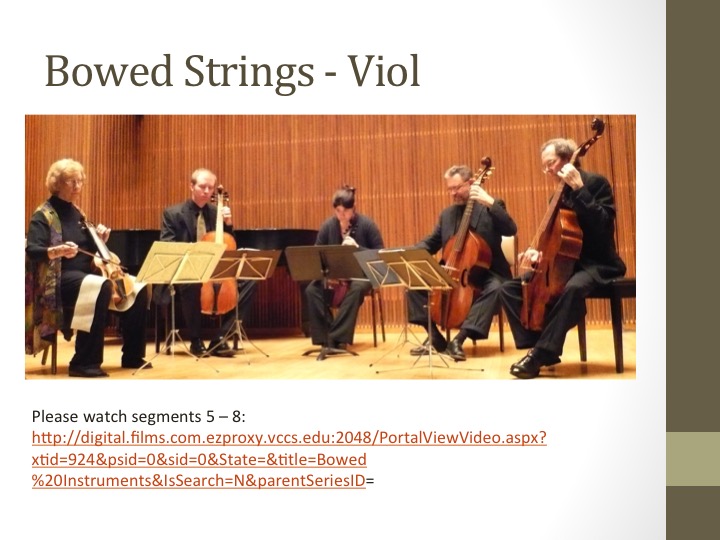
Instruments Used in Renaissance Music The Concert, Gerard van Honthorst, 1623 Introduction Many instruments originated during the Renaissance; others were variations of, or improvements upon, instruments that had existed previously. Some have survived to the present day; others have disappeared, only to be recreated in order to perform music of the period on authentic instruments. As in the modern day, instruments may be classified as brass, strings, percussion, and woodwind. Medieval instruments in Europe had most commonly been used singly, often self accompanied with a drone, or occasionally in parts. From at least as early as the thirteenth century through the fifteenth century there was a division of instruments into haut (loud, shrill, outdoor instruments) and bas (quieter, more intimate instruments). Only two groups of instruments could play freely in both types of ensembles: the cornett and sackbut, and the tabor and tambourine. ...
Early, Middle, and Late Renaissance Music The Musicians, Caravaggio, c. 1595 Early Renaissance Music (1400–1467) This group gradually dropped the late medieval period’s complex devices of isorhythm and extreme syncopation, resulting in a more limpid and flowing style. What their music lost in rhythmic complexity, however, it gained in rhythmic vitality, as a “drive to the cadence” became a prominent feature around mid-century. Middle Renaissance Music (1467–1534) In the early 1470s, music started to be printed using a printing press. Music printing had a major effect on how music spread for not only did a printed piece of music reach a larger audience than any manuscript ever could, it did it far more cheaply as well. Also during this century, a tradition of famous makers began for many instruments. These makers were masters of their craft. An example is Neuschel for his trumpets. Towards the end of the fifteenth century, polyphonic sacred music (as exemplif...


Comments
Post a Comment